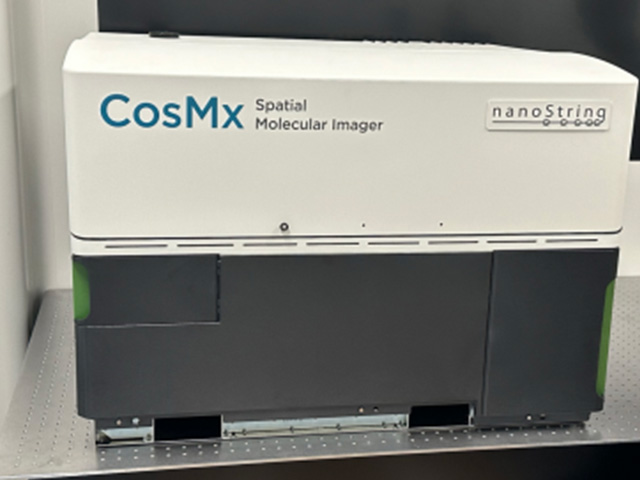
1. The number of slices that can be processed per run: Up to 4 slices can be processed at a time.
2. Imaging mode: Wide-field emission fluorescence.
3. Fluorescence channels: 5 colors, including Alexa Fluor-488, Atto-532, Dyomics Dy-605, Alexa Fluor-647 and DAPI.
4. Microfluidic system: Primarily used for the automatic cleaning of tissue samples, including multiple rounds of probe hybridization and elution.
5. RNA analysis multiplicity ≥ 1000 copies, up to a total transcriptome ≥ 18,000 copies.
6. Protein analysis multiplicity ≥ 64 copies.
7. Objective lens: 22.78X 1.1NA water immersion lens.
8. Pixel size: 120nm.
9. Field of View (FOV) size: 0.511 mm x 0.511 mm.
10. Transcription positioning accuracy: Less than 50nm.
The CosMx SMI system is based on the highly sensitive in situ hybridization technology, integrating ultra-precise imaging, high-throughput detection, and multi-omics analysis techniques. This enables researchers to observe and quantify the expression levels of multiple target proteins and genes in situ on paraffin-embedded tissue sections (FFPE) or fresh frozen sections, conducting spatial multi-omics expression analysis at the subcellular resolution. This biological analysis technology for multiple protein/RNA quantitative analysis on in situ tissue sections provides spatial location information and in situ expression quantity information within the tissue microenvironment of multiple target molecules, assisting in analyzing the interaction relationships between different cell types in the pathological process of tissues, promoting the precise analysis of disease pathological mechanisms within the tissue microenvironment, and simultaneously conducting qualitative and quantitative analysis of a large number of transcripts.
Application fields: 1. High-resolution analysis of tumor heterogeneity and tumor immune microenvironment; 2. Mechanism research of neuroinflammation, neuropathology and neurodegenerative diseases; 3. Analysis of inhibitory factors related to immune escape; 4. Development of clinical precision medical plans and combined treatment plan research; 5. Development of biomarkers related to tumors, nerves, immunity and other diseases.
 Return to Main Site
 Search
 中文
中文



 中文
中文






 Message